

My Approach
As an Integrative Psychotherapist, I draw on a range of approaches to tailor my approach to the unique needs of each client. Before your first session, you’ll be invited to complete a preferences questionnaire so you can share how you’d like your therapy to be. The modalities the mainly inspire my practice are:

Designed for You
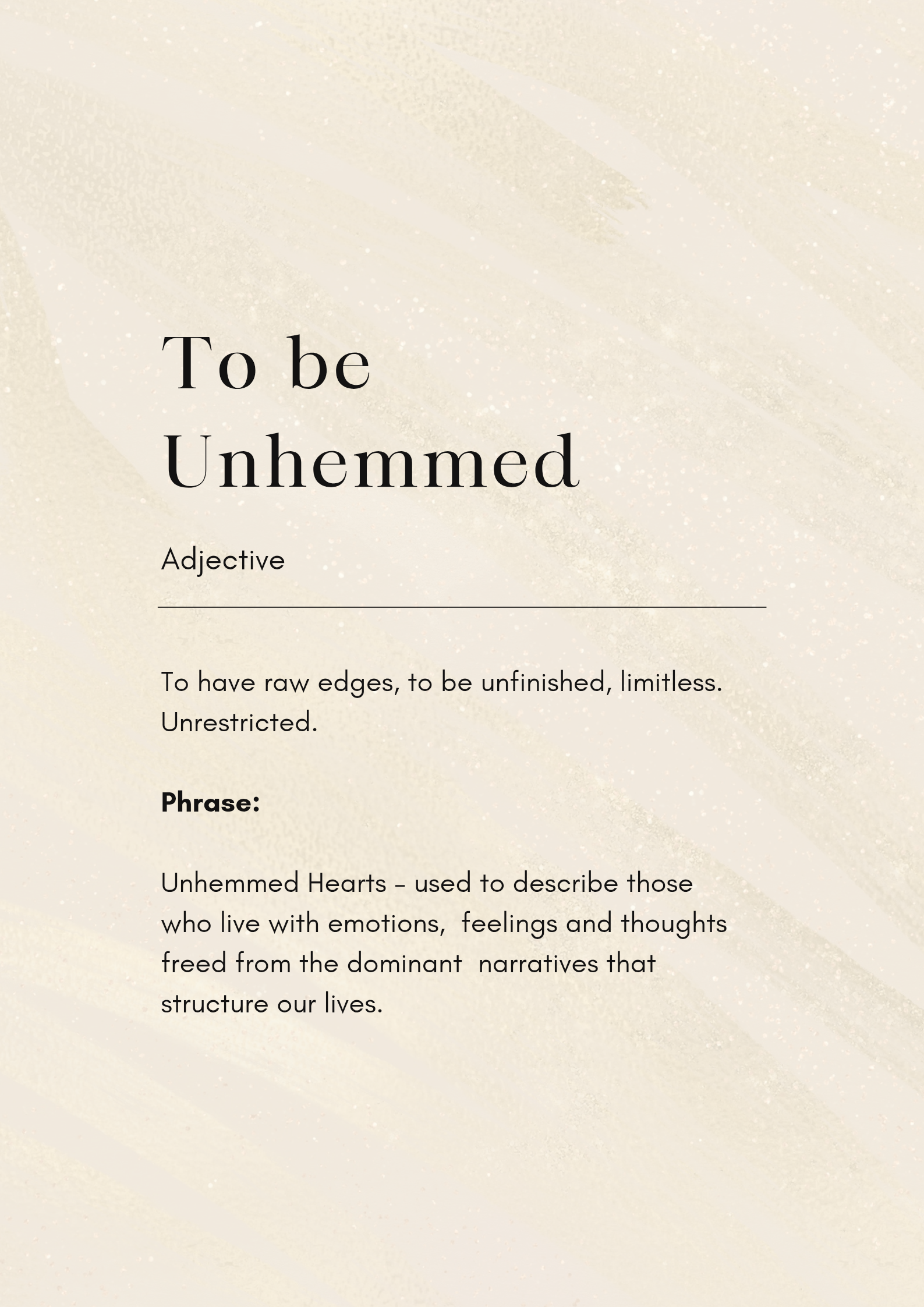
Where unfinished edges are embraced
I believe that a well-lived life embraces the full range of human experience – the messy, the hard, and the broken just as much as the happy, the the beautiful and the easy.
In my work, I help people make sense of life’s challenges so they can move forward with greater clarity and confidence.


‘My therapist said’
Psychotherapy language has been assimilated into everyday conversation, People increasingly hear about ‘toxic’ people and ‘abusive’ and ‘codependent’ relationships, but also about ‘coping mechanisms’, ‘traumas’, ‘anxieties’ and ‘emotional triggers’. Tiktoks and Reels gaining millions in likes, with everyday life and personal challenges now being described in the same way as psychological deficits. Natural human suffering, sadness, or grief is frequently relabeled as a clinical disorder, framed as something only curable through professional services.
Philosopher Michel Foucault famously described how control over how people talk about something, i.e the language used and the meaning given to language, equates with control over how a person perceives and comes to experience both themselves and the world. How mental health is talked about significantly affects how we understand ourselves and and others.
The wellness industry thrives on individual responsibility. Can’t keep up at work? Fix your mindset. Feeling depressed? Journal your way out of it. Have you ever been told to “stay positive” or “practice gratitude” in the face of something truly awful, like a job that grinds you into the ground or a government that doesn’t seem to care? The message is clear: if you’re struggling, it’s because you’re not trying hard enough

The aim of modern psychology is to help individuals and families adapt to the status quo. ‘Tolerating discomfort’. People are often told to practice mindfulness, gratitude, or resilience to cope with systemic burnout or financial instability. Work place wellbeing workshops, in which overworked underpaid employees are given mindfulness exercises to help manage stress. Burnt out? Try mindfulness. Can’t pay your bills? Work on your abundance mindset. Struggling with anxiety? Meditate harder.
Powerful emotions such as grief, uncertainty, identity struggles, or loneliness are often treated as individual problems that require expert intervention. The focus from fixing flawed social or economic systems to fixing the individual.Marginalized individuals and groups experience prejudice and bias, internalize negative stereotypes, and are then pathologized by Western psychology for identifying or responding.

Stories. Still being woven.
With my background in Politics, Philosophy and Economics and linguistics, I have committed years to better understanding how individuals and communities can liberate themselves from harmful narratives.
Ive long been fascinated by some of the paradoxes of modern life:
We are now the most connected civilisation in the history of mankind, yet rates of loneliness continue to soar.
The global Wellness Industry is worth approx 6.8 Trillion dollars, yet more and more people report being depressed.
The UK Workforce has never worked longer hours, yet productivity is stagnant
After many years of research and reflection, I set up Unhemmed Hearts to offer something different to mainstream therapy services.
My practice is not about being analysed or advised, diagnosed.
It will not make you a ‘better’ person.
It will however invite you to reflect on the person you are- and the ideas influence your sense of self
Through reflective conversations and dialogic workshops, Unhemmed Hearts invites people to pause and explore the stories shaping our lives. Together we examine the threads of identity, power, belonging, and social expectation that influence how we relate to ourselves and each other. We reflect on how meaning has been made, and tease out the roots of core beliefs.
The aim is not to provide solutions or diagnoses, but to create spaces where people can think together about their lives, relationships, and environments in a more open and honest way. In these spaces, conversation returns to something more fundamental: people speaking and listening to one another with curiosity rather than judgement.

Liberation Psychology
Human experiences do not arise in isolation. They are shaped by relationships, social norms, economic pressures, cultural expectations, and power structures that influence how we see ourselves and how we relate to others.
Unhemmed Hearts creates spaces where people can reflect together on the wider contexts shaping their lives. This includes conversations about identity and belonging, power and roles within.
A hem finishes a piece of fabric, sealing its edges neatly in place. Something unhemmed, by contrast, remains open at the edges. Threads are visible. The material can still be examined, adjusted, and reworked.
Unhemmed Hearts invites us to approach our lives in a similar way.
Rather than assuming our stories are fixed and complete, we can look more closely at the threads that shape them. And sometimes, in doing so together, new possibilities begin to appear.